top of page
Play Video
Play Video
43:27
Webinar: Large Area Eddy Current Array (ECA) in Lieu of PT & MT
Play Video
Play Video
05:09
Having Three Eddy Current Array Probes In One
Play Video
Play Video
10:46
Surf X Weld User Tutorial
Play Video
Play Video
01:25
SurfX Tape Probe and UltraVision ET Software
Play Video
Play Video
00:45
UltraVision ET Software is ideal for eddy current array (ECA) surface inspections
Play Video
Play Video
02:45
Inspecting for Surface Cracks in Train Wheels
Play Video
Play Video
12:29
Eddy current testing in Aerospace
Play Video
Play Video
00:47
Eddy Current Inspection on Wing Spar #shorts #aviation
Play Video
Play Video
15:02
Eddy Current Inspection of Piper Wing Spars
Play Video
Play Video
06:21
Eddycon C for aircraft testing using eddy current
Play Video
Play Video
02:25
A typical Cessna Cardinal carry through spar eddy current inspection, part of the carry through AD.
Play Video
Play Video
10:33
KCTC NTD Eddy Current Inspection AD 2020-26-16
Play Video
Play Video
02:08
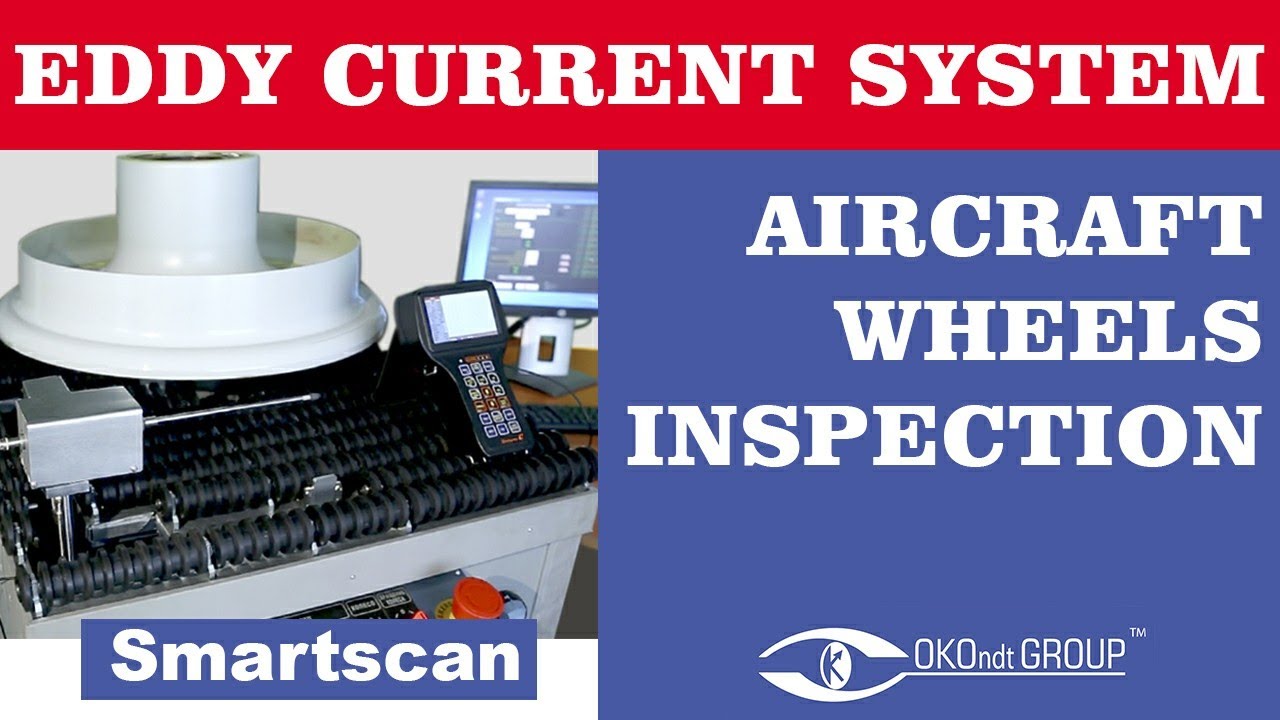
More Accurate and Simplified Aircraft Wheel Inspections
Play Video
Play Video
00:06
Skin seam joint inspection on a Cessna
Play Video
Play Video
03:06
Seminar review: "The Eddycon C flaw detector application in the aviation"
Load More
Wheels
Play Video
Play Video
02:45
Inspecting for Surface Cracks in Train Wheels
Play Video
Play Video
01:50
Eddy Current Testing of aircraft wheel rim surface (AWT 950 NG)
Play Video
Play Video
01:57
SMARTSCAN-FA Eddy Current Aircraft Wheel Inspection System
Play Video
Play Video
01:43
The system for eddy current testing of aircraft wheels - SMARTSCAN
Play Video
Play Video
01:25
Eddy Current Testing of aircraft wheels – manipulator (AWM100)
Play Video
Play Video
03:01
SMARTSCAN-FA Eddy Current System for Aircraft Wheel Inspection
Play Video
Play Video
02:59
SSIPL OKO SMARTSCAN FA Eddy Current System for Aircraft Wheel Inspection
Play Video
Play Video
03:38
VEESCAN - Eddy current aircraft wheel inspection system
Play Video
Play Video
01:57
SMARTSCAN-FA Eddy Current Aircraft Wheel Inspection System
Load More
Play Video
Play Video
05:15
How to set up for Fastener Hole Inspection
Play Video
Play Video
03:00
Inspecting for Subsurface Cracks in Aluminum Multilayer with Fasteners
Play Video
Play Video
00:50
Eddy Current testing for flaws in hidden layers
Play Video
Play Video
41:53
Improved Methods for Fastener Hole Inspection
Play Video
Play Video
00:30
Eddy Current Inspection of Rivets
Play Video
Play Video
00:22
Eddy Current Bore Hole Inspection
Play Video
Play Video
00:50
Eddy Current Inspection(Open Hole Inspection)
Play Video
Play Video
13:02
Intro to Eddy Current Machine
Play Video
Play Video
06:51
Paint thickness using 500Khz probe
Play Video
Play Video
07:28
Bolt Hole Scanner
Play Video
Play Video
10:40
Steel ET Crack Detection
Play Video
Play Video
09:44
Conductivity Curve
Play Video
Play Video
10:36
Eddy Current Conductivity Curve Applications
Play Video
Play Video
08:04
Crack Detection
Play Video
Play Video
05:39
2nd Layer Crack Detection
Play Video
Play Video
09:32
Thickness Sampling
Play Video
Play Video
04:23
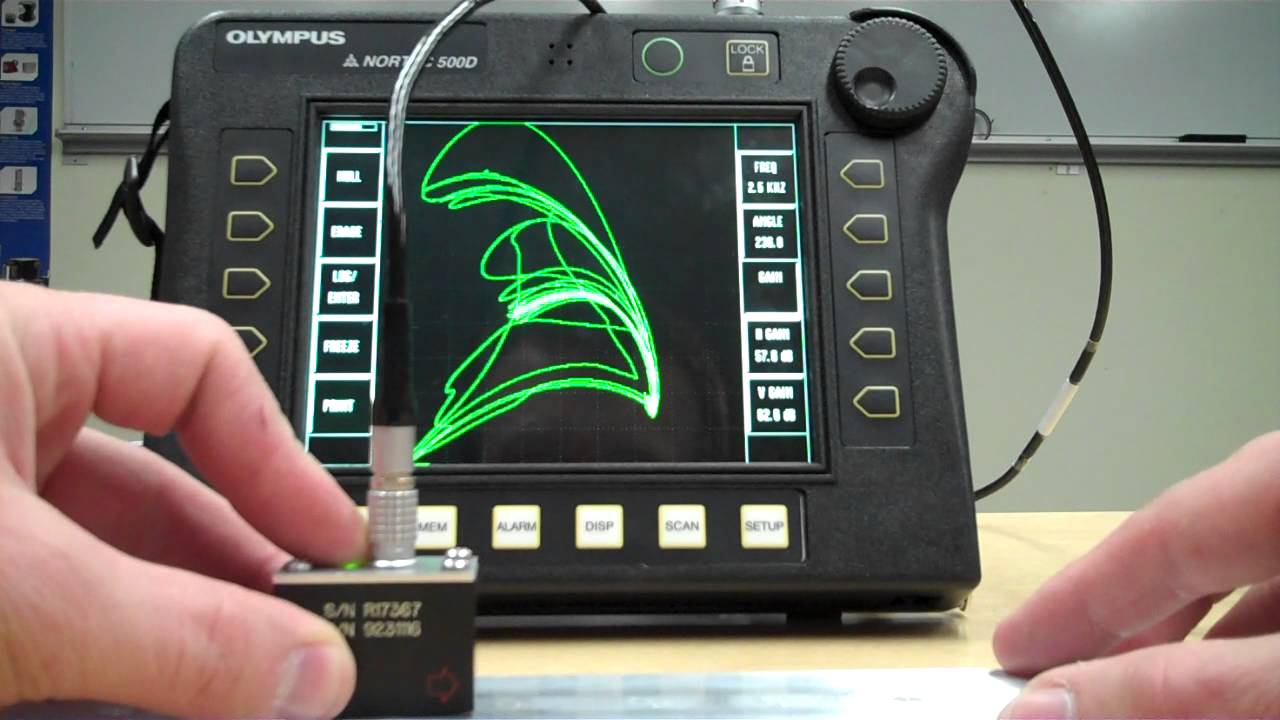
Inspecting Carbon Steel Welds with the NORTEC 600
Watch our video given by Olympus’ Tommy Bourgelas, Product Manager for Eddy Current and Bond Testing as he demonstrate how and why the NORTEC 600 is the ideal flaw detector for the inspection of carbon steel weld in oil and gas and power generation applications.
Play Video
Play Video
01:46
How to setup a Paint Probe for Weld Inspection
Weld/AeroCheck – Paint Thickness Measurement using a Paint Probe 1. Set the instrument as follows: See video 2. Make sure the Persistence is set to off (under the persistence tap) as shows: 3. Select the Offset icon (the cross on the left hand side bar), move the x offset to -30% using the left or right arrow key 4. Program the bottom blank key Trace 5. Balance probe in air 6. Place probe on block and lift off 7. Move the x: coordinate to the right by 10 8. Insert x1 shim, take reading, move to the right by 10 9. Insert x2 shim, take reading, move to the right by 10 10. Insert x3 shim, take reading, move to the right by 10 11. Insert x4 shim, take reading, move to the right by 10 12. Press the bottom blank key, press balance, your trace from your reference block should turn black and look like the following, the red trace is then the measurement for the real area being inspected, the beauty of ding it this way is that at any point you can clear the red trace and take another reading without removing the calibration trace: 13. To remove the black trace press the blank trace button.
Play Video
Play Video
02:14
Nortec600 #olympus Weld surface Inspection #eddycurrent
Play Video
Play Video
00:48
Eddy Current Surface Scan ECHO NDE
Play Video
Play Video
00:21
Eddy Current Weld Inspection: A Comprehensive Guide
Description: Explore the world of Eddy Current Weld Inspection Don't forget to like, share, and subscribe for more videos on NDT methods and advanced inspection technologies! #EddyCurrent #WeldInspection #NDT #NonDestructiveTesting #Welding #QualityControl #InspectionTechnology
Play Video
Play Video
31:05
Webinar: Optimizing Weld Inspection With eddy current - GE
Learn how eddy current can save time and money when replacing MP or LP weld inspection. In this webinar, we cover the following: - Challenging new landscape of NDT - Addressing the new NDT challenges - Eddy Current alternative to LP & MPI - Mentor EM for eddy current weld inspection - Eddy Current WeldScan Probes - Optimizing the weld inspection experience - Guided workflow for weld inspection - Developing a custom weld inspection application with Mentor Create - Mentor EM for weld inspection Find the webinar slides at https://www.gemeasurement.com/sites/gemc.dev/files/customizing_your_eddy_current_experience_webinar_oct_2015.pdf. Find out more about GE Digital Solutions at https://www.gemeasurement.com.
Play Video
Play Video
01:45
WeldCheck Eddy Current Flaw Detector Actual Test
Watch a live test with the ETher NDE WeldCheck to get a feel for the equipment. An Eddy Current Flaw Detector designed to work the way you do!
Play Video
Play Video
01:00
WeldCheck Eddy Current Flaw Detector Probes
What Probes can I use with the ETher NDE WeldCheck ECT Flaw Detector? Watch this video to have a look at our EC Weld Probes.
Play Video
Play Video
00:19
Detecting Cracks in Welds with Eddy Current Inspection
Description: In this video, we demonstrate the effectiveness of Eddy Current inspection for detecting cracks in welds, a critical aspect of ensuring the structural integrity and safety of welded joints in various industries. Whether you're in aerospace, construction, or manufacturing, understanding how to identify weld defects is essential. Weld Inspection Process: Step-by-step demonstration of how to use Eddy Current equipment to inspect welds for cracks. Crack Detection: Real-time identification of cracks in welds, with explanations of the Eddy Current signals and what they indicate. This video is perfect for NDT professionals, weld inspectors, and anyone involved in the quality control of welded structures. If you found this video valuable, please like, share, and subscribe for more content on non-destructive testing (NDT) and weld inspection techniques! #EddyCurrent #WeldInspection #CrackDetection #NDT #NonDestructiveTesting #Welding #QualityControl #MaterialInspection
Load More
Thread Inspection
Play Video
Play Video
03:44
Eddy Current Testing see how its done
Play Video
Play Video
01:06
Eddy Current Thread Test Application | Criterion NDT
Play Video
Play Video
00:09
Eddy Current Inspection of Screw Threads: Calibration
Play Video
Play Video
02:18
Eddy Current NDT Thread Inspection Demonstration
Play Video
Play Video
02:59
Truform Equipment - High Speed Eddy Current, Cone Mirror, 360 Thread Damage, PSR Run + Correction
Play Video
Play Video
01:01
Criterion NDT Valve Cover Thread Test
Play Video
Play Video
01:19
VGAGE Eddy Current Thread Verification Gage
Play Video
Play Video
00:57
Eddy Current Semiautomatic Bolt Testing System
Play Video
Play Video
05:15
SigmaCheck How To Metal Sorting
Configuring and using the ETher NDE Eddy Current (ECT) SigmaCheck Conductivity Meter for Metal Sorting.
Play Video
Play Video
02:54
Eddy current in Aerospace: NORTEC 600 Conductivity and Coating Thickness Calibration Guide
This video shows you how to calibrate the nortec 600 eddy current meter to measure the electrical conductivity of materials used in aircraft maintenance, some common materials such as aluminum alloy or titanium alloy will change the crystal structure when overheated, leading to a change in conductivity, using the eddy current method can accurately determine the conductivity of conductive materials
Play Video
Play Video
05:18
Easy Conductivity Calibrations with the MIZ-21C
The MIZ-21C eddy current handheld instrument features a calibration wizard which is an intuitive interface that makes the MIZ-21C easy to use for conductivity measurements. This video demonstrates how to setup the MIZ-21C for conductivity testing.
Play Video
Play Video
02:42
Conductivity and Coating Thickness Measurement using Eddycon C/CL Flaw Detectors
Play Video
Play Video
00:57
Conductivity Check with Eddy Current Testing
Description: Discover how Eddy Current Testing is used to perform accurate conductivity checks on various metals and alloys. Applications: Understand how conductivity checks are used for material identification, heat treatment verification, and defect detection. Whether you’re an NDT professional, engineer, or simply curious about advanced testing techniques, this video will provide you with valuable insights into how Eddy Current Testing can enhance your material inspection processes. If you found this video helpful, don’t forget to like, share, and subscribe for more content on non-destructive testing (NDT) and material inspection techniques! #EddyCurrent #ConductivityCheck #NDT #NonDestructiveTesting #MaterialInspection #Metallurgy #QualityControl
Play Video
Play Video
15:41
Mentor EM 05 Conductivity Measurement
In this installment, we have a look at the Mentor EM as a conductivity meter. Mentor provides a specialized app, along with a smart probe design for measuring electrical conductivity. The Mentor provides simultaneous measurement of sample conductivity and coating thickness, along with temperature of the probe and sample. Display of any or all of these parameters or alarms for them are all possible. The Mentor supports two probe sizes and five possible frequencies, making this one of the most thorough and accurate eddy current conductivity meters available, all in a versatile flaw detector. Special averaging and automatic alarm threshold setting features provide additional productivity when doing comparative conductivity measurements, such as lightning strike damage inspections of aluminum skin aircraft.
Tubing
Play Video
Play Video
00:36
Eddy current Tube Inspection Analysis
Play Video
Play Video
02:52
NORTEC® 600D Heat Exchanger Tubing Inspection Kit: Eddy Current Testing
Play Video
Play Video
00:56
E&I, Engineering & Inspections. Fully Automated Eddy Current Testing of exchanger tubes. Tubing.
Play Video
Play Video
00:32
Eddy current testing of stainless steel tubes
Play Video
Play Video
04:42
Eddy Current NDT Dual Frequency Inspection
Play Video
Play Video
11:46
Mentor EM 06 Mix and Tubing Inspection
Eddy Current Slide Rule
Play Video
Play Video
03:02
Calculating Prime Frequency for Tubing
Play Video
Play Video
03:19
Eddy Current F90 Frequency
Play Video
Play Video
08:09
Eddy Current Slide Rule Calculator
Eddy Current Braking
Play Video
Play Video
05:56
Eddy current - Eddy current brakes #howitworks #trains #physics #electromagnetic #Induction
Play Video
Play Video
04:44
Eddy Currents and Magnetic Braking of a Pendulum Caused by Electromagnetic Induction
Play Video
Play Video
00:12
Magnetic Eddy current brake
Play Video
Play Video
00:20
5K20.22 - Eddy Current Brake
Play Video
Play Video
01:03
eddycurrentbraking
Play Video
Play Video
01:46
Wheel Speed Sensor Operation & Testing
AutoMate is now the new and improved Autodata Training. Check out www.autodata-training.com to access more than 300, high-quality, full-length training videos. Subscribe today for full access and new training content every few weeks! Critical vehicle systems such as ABS, Stability and Traction Control rely on the precise data provided by wheel speed sensors for correct operation. These sensitive sensors require specific equipment to test and an understanding of their operation and signal outputs to ensure accurate diagnosis.
Play Video
Play Video
03:22
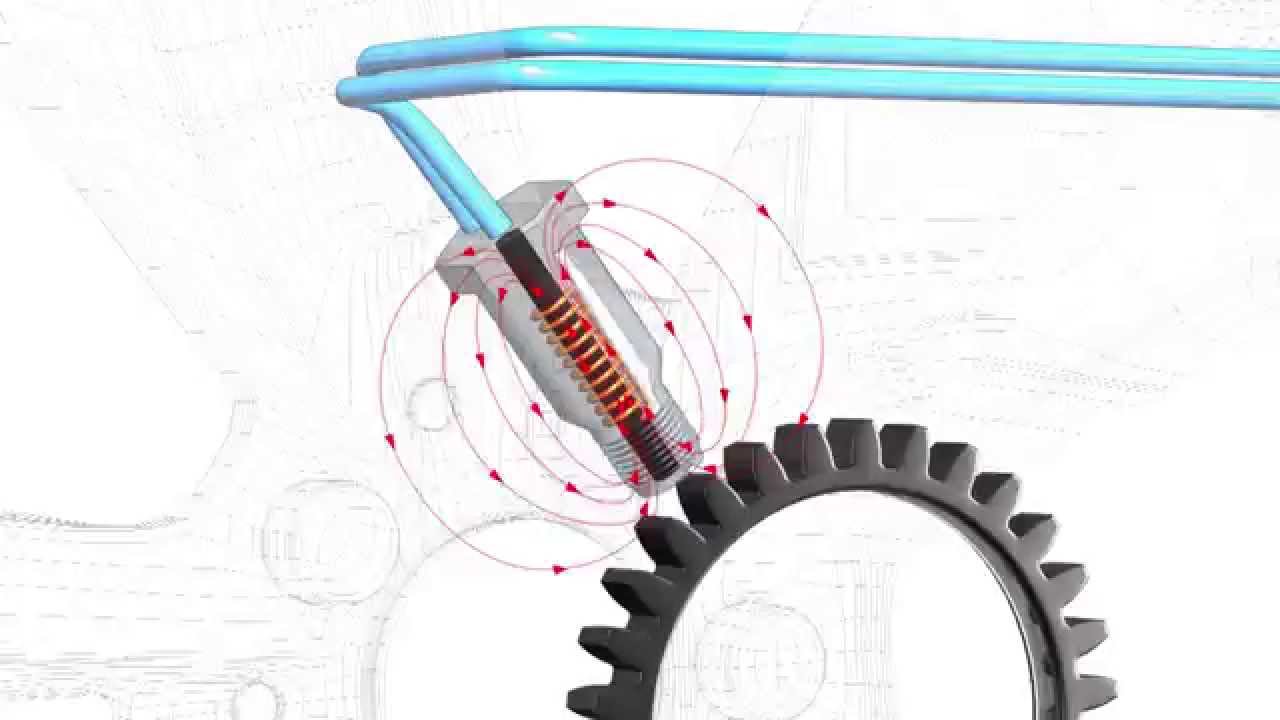
What are Eddy current sensors? | Skill-Lync
Eddy currents can be used to measure the minute changes that happen in big machines. They can detect any change in shape, and hence can be used as a cautious system to prevent any major accidents on big sites from happening. Eddy current sensors consist of a conductor through which an alternating electric field is flowing, and because of this, the magnet develops a magnetic field of its own. When a metal is brought around the current-carrying conductor, the metal gets induced with current, known as eddy currents. This conductor, having developed an induced current, now has a magnetic field of its own which opposes the magnetic field of the current producing it. This relation is used in many machines. If there is a change in the flux noted, then the machine is checked for any flaws. Visit our website for advanced Engineering courses - https://bit.ly/3btwbAy About Skill-Lync Skill-Lync helps you learn industry-relevant skills that will accelerate your career. More than 8000+ students have enrolled in courses across Mechanical, Electrical, Electronics, Civil & Computer Science engineering. We are rated 4.8/5 on Google out of 1000+ reviews. Our students now work in companies like Fiat Chrysler, Tata Motors, Ford, Ather, Mercedes Benz, Bosch, and many more. Here are a few courses you can take a look at; Master's Certification in Hybrid Electric Vehicle Design & Analysis - https://bit.ly/3624C0G CFD Engineer Master's Certification Program - https://bit.ly/32ew0Y2 CAE Master's Certification Program - https://bit.ly/369rknM Design Engineer Master's Certification Program - https://bit.ly/3kVCouQ Master's Certification Program in Electric Vehicle Design & Analysis - https://bit.ly/34Wnsak Master's Certification Program in High-Rise building Design & Analysis - https://bit.ly/3l9iVGQ Master's Certification in Full Stack Web Development - https://bit.ly/34Smpbg References- Micro-Epsilon Messtechnik. Video used under creative commons license/https://youtu.be/MqFXFnkHk-8?t=72 Micro-Epsilon Messtechnik/ https://www.micro-epsilon.com/images/titles/eddy-current/inductive-sensors-eddy-current-1.jpg Bertall & Cie. / Public domain/https://upload.wikimedia.org/wikipedia/commons/thumb/9/97/Portrait_Leon_Foucault_1882.jpg/72px-Portrait_Leon_Foucault_1882.jpg https://youtu.be/MqFXFnkHk-8?t=48
Play Video
Play Video
10:29
Magnetic Flow Meter Explained | Working Principles
▶ Ready to level up your industrial automation skills? Look no further than RealPars! With easy-to-follow courses and certificates, you can boost your knowledge in this field quickly - all from the comfort of your home. Get started today: https://realpars.com ▶ You can read the full post here https://realpars.com/magnetic-flow-meter/ ⌚Timestamps: 00:00 - Intro 00:51 - What is a Magnetic Flow Sensor? 01:46 - The Magic is in the Magnet 03:09 - Faraday’s Law 05:19 - Conductive Fluids 06:41 - Other Considerations for Installation 09:12 - Summary ============================= Magnetic flow sensors are a very commonly used flow meter type that is useful in a wide range of applications and line sizes. Accurate and repeatable measurement of flow is a requirement for industrial processes, including feed streams, tank recirculation loops, product transfer lines, and many others. In this video, we will - Introduce you to the working principles of a magnetic flow sensor, - Describe the physical characteristics of a magnetic flow sensor that make it valuable for process control, - Describe the ways magnetic flow sensors can be integrated into a measurement and control system. Magnetic flow sensors convert the velocity of a flowing fluid into a measurable electrical signal that is proportional to the flow rate. Magnetic flowmeters have no moving parts or internal flow path obstructions, so they are easy to calibrate and maintain. Because magnetic flow meters are typically specified to be the same size as the upstream and downstream piping, there is virtually no pressure loss through the flow meter, which can be very advantageous for some flow streams, like thick slurries. Magnetic Flow sensors are often called mag meters, and we will refer to them using this abbreviation. Mag meters are typically full-bore sensors, meaning that the internal flow path is of the same diameter as the upstream and downstream connections. This construction eliminates any restriction of the fluid which may alter the flow path or create a pressure drop. Fluid passes through the mag meter in a straight line through the bore of the sensor. This regular, cylindrical geometry also allows a constant and directional magnetic field to be established across the diameter of the flow path. The magic that creates the flow signal is based in the magnet! The mag meter is surrounded by an iron-core, permanent magnet that creates a magnetic field to be established with lines of magnetic flux which pass vertically through the entire cross-section of the pipe and the flowing fluid. This geometry is very important. The flowing fluid will pass through these lines of magnetic flux at a 90-degree angle or perpendicular to the lines of magnetic flux. To generate a voltage according to Faraday’s law, we must have a moving conductor. The conductivity of liquids is measured in units of micro-Siemens-per-centimeter. Some fluids, such as seawater, have high conductivity, and seawater flow can be measured with a mag meter. In addition to seawater, flows of wastewater, and ionic solutions such as acids can easily be measured by magnetic flowmeters. When installing a magnetic flow meter in process piping, it is vitally important to follow the manufacturer’s recommendation for grounding. The electrical signal produced in a mag meter is a very small DC voltage, and stray voltages along a pipe due to welding equipment or other large electrical loads in the plant. Transmitters are always used with mag meters. They convert the small DC voltages generated by the flowing fluid into signals that can be connected to the control system. 4 to 20 milliamp, Profibus PA, Foundation Fieldbus, and IO-Link transmitter outputs are available. When specifying magnetic flowmeters, some important aspects must be considered in addition to the conductivity of the fluid and the need for grounding rings. If the fluid is corrosive or abrasive, a compatible liner should be specified. These liners can also be replaced if they become worn, and they do not affect measurement accuracy. ============================= Get a RealPars pro membership: https://learn.realpars.com/bundles/pro ============================= Missed our most recent videos? Watch them here: https://realpars.com/circuit-breaker/ https://realpars.com/node-red/ https://realpars.com/u-control ============================= To stay up to date with our last videos, make sure to subscribe to this YouTube channel: http://bit.ly/realpars ============================= TWEET THIS VIDEO: https://ctt.ac/Bdr2Z ============================= Follow us on Facebook 👉 https://www.facebook.com/therealpars Follow us on Twitter 👉 https://twitter.com/realpars Follow us on LinkedIn 👉 https://www.linkedin.com/company/realpars Follow us on Instagram 👉 https://www.instagram.com/realparsdotcom #RealPars #sensor #flowmeter
Play Video
Play Video
10:14
How to Measure Flow with Magnets - (Magnetic Flow Meters)
What happens when a civil engineer mixes water and electricity? The results aren't always ideal, but you always learn something! A magnetic flow meter relies on Faraday's Law of Induction to measure the flow of a fluid. Magnets outside the pipe create a magnetic field. Electrodes are located perpendicular to the magnets. A conductive fluid moving through the pipe will generate a voltage (electromotive force) between the electrodes due to Faraday’s law. The faster the fluid moves through the pipe, the higher the voltage. Once you know the velocity of the fluid, you can calculate flow using the cross sectional area of the pipe. In this video, I walk through some of the details that electrical engineers have worked out so that this ingenious device can work properly. Unfortunately I couldn't get it working very well myself! Want to learn more? Wikipedia - https://en.wikipedia.org/wiki/Magnetic_flow_meter Neha Girme Blog - https://nehagirme.wordpress.com/2011/11/19/electromagnetic-flowmeter-design/ Arudino Code - https://github.com/gradyh/dc_pulse_gen Watch this video and the entire Practical Engineering catalog ad-free on Nebula: https://go.nebula.tv/practical-engineering Patreon: http://patreon.com/PracticalEngineering Website: http://practical.engineering Audible: http://www.audible.com/engineer 3D Model: Devin Sloan Music: Elexive - Tonic and Energy (https://www.youtube.com/watch?v=U6fBPdu8w9U) Errata: -At 4:36, the signal to noise ratio is low, not high.
Play Video
Play Video
07:20
Electro-magnetic Flow Meters - Dual Frequency Technology (Part 2)
Explanation of both induced and slurry noise and how these types of noises adversary affect the performance of traditional electro-magnetic flow meters. How Yokogawa's patented dual frequency eliminates these effects to provide quantifiable customer benefits.
Play Video
Play Video
02:35
Eddy current sensors - operating principle and application examples
Eddy current sensors from Micro-Epsilon (eddyNCDT) measure distances, displacements, or positions of any electrically-conductive target. Eddy current sensors from Micro-Epsilon are ideally suited for applications in harsh industrial environments (pressure, dust, temperature). Furthermore, the eddy current sensors are integrated in semiconductor applications where submicron accuracy is demanded. + High precision and resolution + Non-contact and wear-free + Insensitive to dirt + Suitable for fast applications + Very good price/performance ratio Auf Deutsch: http://www.youtube.com/watch?v=ZfkyWJa_q2Y En Français: http://www.youtube.com/watch?v=UDY_kCMXoWE http://www.micro-epsilon.com/displacement-position-sensors/eddy-current-sensor/index.html
Play Video
Play Video
04:53
Hydrology - Flow measurements using a current meter | Eng.Tony Chabz |.
Explanation of the parts and use of a current meter flow discharge measurement #hydrology #waterresourcesengineering
Play Video
Play Video
01:31
How Do Magnetic Inductive Flow Meters Work from AutomationDirect?
To learn more: https://www.automationdirect.com/flow-sensor?utm_source=JAkkHF-VZts&utm_medium=VideoTeamDescription - (VID-FL-0006) Did you ever wonder how magnetic inductive flow meters work? Check out this animation to learn the secret! Online Support Page: https://community.automationdirect.com/s/?utm_source=JAkkHF-VZts&utm_medium=VideoTeamDescription **Please check our website for our most up-to-date product pricing and availability. Related AutomationDirect.com part numbers: FMM50-1002, FMM75-1002, FMM100-1002, FMM150-1002, FMM200-1002, FMM50-1001, FMM75-1001, FMM100-1001, FMM150-1001, FMM200-1001, FMM-GND1
Play Video
Play Video
03:47
AMS EZ 1000 – Smart Eddy-Current Sensor & Converter
Bjoern Mueller explains how AMS EZ 1000 helps customers solve challenges like dealing with high product complexity and high lead times at traditional eddy current sensor chains and spare part handling.
Load More
Play Video
Play Video
03:51
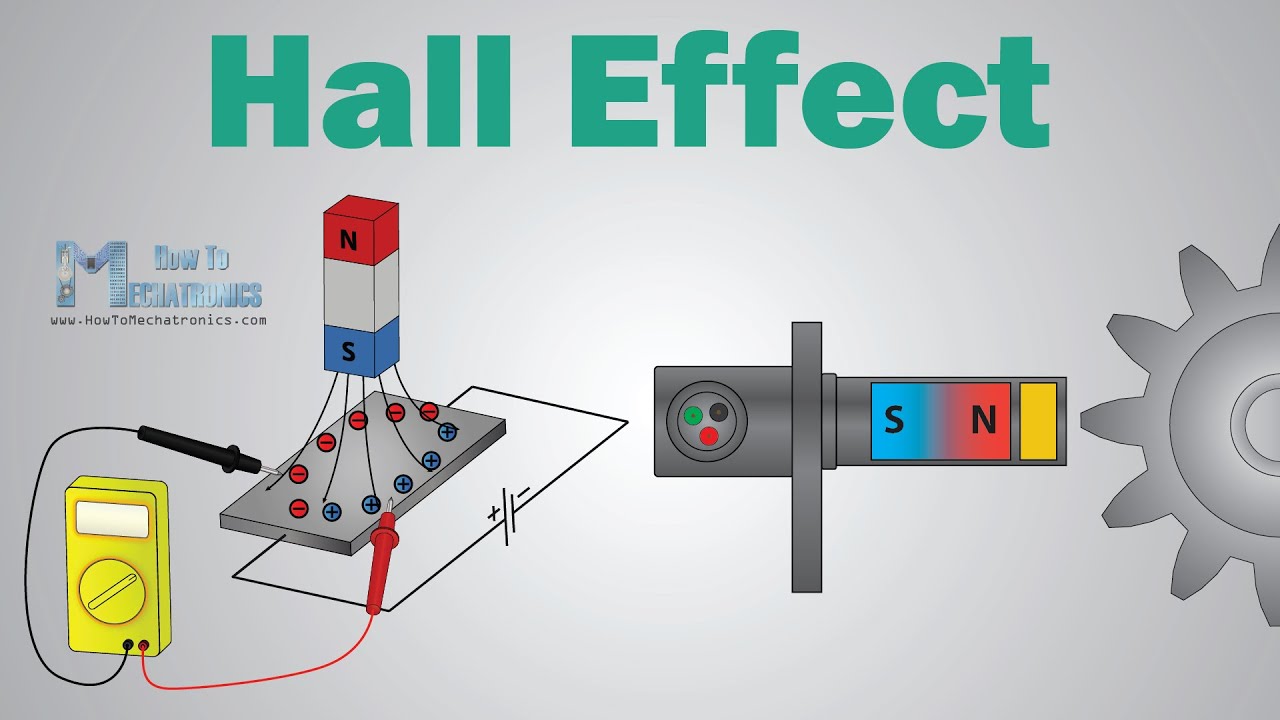
What is Hall Effect and How Hall Effect Sensors Work
https://howtomechatronics.com/how-it-works/electrical-engineering/hall-effect-hall-effect-sensors-work/ ► Find more on my official website! In this video we will learn what is Hall Effect and how Hall Effect Sensors work. The Hall Effect is the most common method of measuring magnetic field and the Hall Effect sensors are very popular and have many contemporary applications. If you enjoy and find the content that I make useful, please consider supporting me on Patreon: https://www.patreon.com/howtomechatronics Visit HowToMechatronics.com for more Tutorials, Tips, Projects and How It Works videos: ► https://howtomechatronics.com/ Like my page on Facebook: ► https://www.facebook.com/howtomechatronics Music: Aduro by Jens Kiilstofte (machinimasound.com/music)
Play Video
Play Video
04:32
SparkFun Linear 3D Hall-Effect Sensor
SparkFun Linear 3D Hall-Effect Sensor: https://www.sparkfun.com/products/23880 SparkFun Mini Linear 3D Hall-Effect Sensor: https://www.sparkfun.com/products/23881 The SparkFun TMAG5273 Qwiic Linear 3D Hall-Effect Sensor is a low-power, high-precision magnetic field sensor that can detect a magnetic field's presence, strength, and direction in three dimensions. This board is perfect for applications involving magnetic proximity detection, door and window sensing, mobile rotor and control, and more, all on a Standard 1in. x 1in or on a Mini 0.5in. x 1in. Qwiic breakout! scottbez1's DIY haptic input knob: BLDC motor + round LCD video: https://www.youtube.com/watch?v=ip641WmY4pA
Play Video
Play Video
07:57
How Do Hall Effect Sensors Work? - The Learning Circuit
At an atomic level, electromagnetic fields are what makes electricity work. In a previous video, Electricity and Magnetism, Karen talks about how they work together in electronics. In this video, Karen introduces a sensor that is triggered by magnetic fields, the hall effect sensor. While Karen has used reed switches, an electromechanical magnetic switch, in an escape room puzzle in a previous video, here she shows how hall effect sensors use magnetic fields as either digital (on/off) or analog (linear) switches that are purely electrical with no moving parts. This video continues the exploration of electricity and magnetism also covered in Intro to DC Motors and Intro to Speakers & Microphones: https://bit.ly/3fZLFT5 Engage with the element14 presents team on the element14 Community - suggest builds, find project files and behind the scenes video: http://bit.ly/2MFMG0v Visit the element14 Community for more great activities and free hardware: Tech spotlights: http://bit.ly/2KLz0TS Roadtest and Reviews: http://bit.ly/2KH4fj3 Project14: http://bit.ly/2wPnajx
Play Video
Play Video
05:50
HALL EFFECT SENSOR Comparison: LINEAR vs. UNIPOLAR vs. BIPOLAR Models
In this video, we'll explore and compare three different models of Hall effect sensors: Linear, Unipolar, and Bipolar. These sensors play a crucial role in various applications, from automotive systems to industrial automation. We'll test and analyze their behavior in different scenarios to help you understand how they work. -----HALL sensor SIMPLE comparison (Bipolar x Unipolar)--------------------------- https://youtu.be/cyZqDF5nVFU -----LINEAR HALL Effect sensor (Analog sensor)---------- https://youtu.be/pzNvptKR4W8 -----HALL sensor TRIPLE comparison--------------------------- https://youtu.be/VhVj5FF8Qxo ----HALL effect experiment theory--------------------------------- https://youtu.be/4nRhY4Q90Uo -----HALL unipolar model A3144-------------------------------------- https://youtu.be/yCLyw3DgN3E ----Linear Hall effect on E-Bike Throttle---------------------------- https://youtu.be/QehDPrRzYIw #halleffect #hall #experiment #theory #hallsensor
Play Video
Play Video
01:22
Allegro MicroSystems A31010 Unidirectional Linear Hall-Effect Sensors | Mouser Electronics
Looking for a reliable, high-performance linear Hall-Effect sensor IC? Check out the A31010 Unidirectional Linear Hall-Effect Sensor ICs from Allegro MicroSystems, now available at Mouser Electronics. These sensors provide a voltage output that is directly proportional to the strength of the magnetic field they detect. Join us in this episode of New Product Briefs to learn more about the features, specifications, and applications of this innovative component. Learn More: https://www.mouser.com/new/allegro/allegro-a31010-sensors/?utm_source=eetechmediavideos&utm_medium=display&utm_campaign=allegromicrosystems-newallegroallegro-a31010-sensors&utm_content=1x1&utm_id=702012 See the NEWEST Products: http://mou.sr/MouserNew-yt Subscribe to our Newsletter: http://mou.sr/MouserSignup-yt Like us on Facebook: https://www.facebook.com/mouserelectronics Follow us on Twitter: https://www.twitter.com/MouserElec (Americas) Follow us on Twitter: https://www.twitter.com/MouserElecEU (Europe) Follow us on Twitter: https://www.twitter.com/MouserElecJapan (Japan) Follow us on LinkedIn: https://www.linkedin.com/company/26041/ #MoreWithMouser #MouserNewProductBriefs #AllegroMicroSystems #ElectricalEngineering #DesignEngineer
Play Video
Play Video
02:13
Eddy Current Separator | Non-Ferrous Metal Shredding & Recycling Plant
Eddy current separation is an effective non-ferrous metal recovery method, which can separate non-ferrous metals such as copper and aluminum from mixed materials. For details, plz contact at ✅Email: jackhao0804@gmail.com | helenzhang.suny@gmail.com ✅Whatsapp: +86 137 8362 0467 (Helen) Since the materials passing through the eddy current separator are required to be uniform and the sorting effect is better for materials with a small particle , before using the eddy current separator, it is necessary to pre-treat the materials such as shredding and crushing to reduce the volume of scrap metal materials. This video shows the crushing and sorting process of waste aluminum plates. A double shaft shredder is used to pre-chop the waste aluminum plates, and use a hammer crusher to further reduce the size of the aluminum shreds, and then the crushed aluminum materials pass through an eddy current separator to separate impurities so that the obtained metal aluminum will have a much high purity. If you have similar materials that need to be processed and are interested in this sorting process, welcome to consult us in detail.
Play Video
Play Video
00:24
Eddy Current Separator - Automatic Separation of Metal from Non-metallic
The eddy-current sorting machine has a good sorting effect on a variety of non-magnetic metals, can effectively implement automatic separation of non-metallic materials and non-ferrous metals, and can efficiently recover various non-ferrous metals. Advantage: Easy to operate, automatic separation of metal from non-metallic. Large range feeding materials, normally 3-100mm. Easy to install, low energy consumption, easy maintenance Variety rotor designs are available. High yields of non-ferrous metals recovery Mob(whatsapp): +86-15638898079 Email: info@gominerecycling.com Website : https://www.gominerecycling.com/supporting-equipments/eddy-current-separator.html We have 12+ years experience of e waste recycling machine manufacturing, our main equipments are: Copper wire recycling machine Scrap PCB circuit boards recycling machine Scrap cable stripping machine Aluminum-plastic waste recycling machine Electrostatic Separator Double shaft shredder ...
Play Video
Play Video
00:12
Eddy Current Separator
Prototype Eddy Current Separator for separating ferrous & non ferrous...
Play Video
Play Video
01:01
COGELME - Eddy current separator - Top quality separation of finest Non-Ferrous Metals
Example of non-ferrous metals-plastic-iron separation with Cogelme Eddy current separator. Our machines can separate non-ferrous metals from 350-400 mm till 2-3 mm dimensions. We are specialized in Eddy current separators and magnetic separator. Competitive prices for top quality machines. Perfetta separazione dei metalli non-ferrosi da materiale macinato fine. Le macchine Cogelme garantiscono il miglior risultato di separazione a prezzi competitivi.
bottom of page